
Knee Pain From Climbing the Hamilton Escarpment Stairs: Causes and When to See a Physio
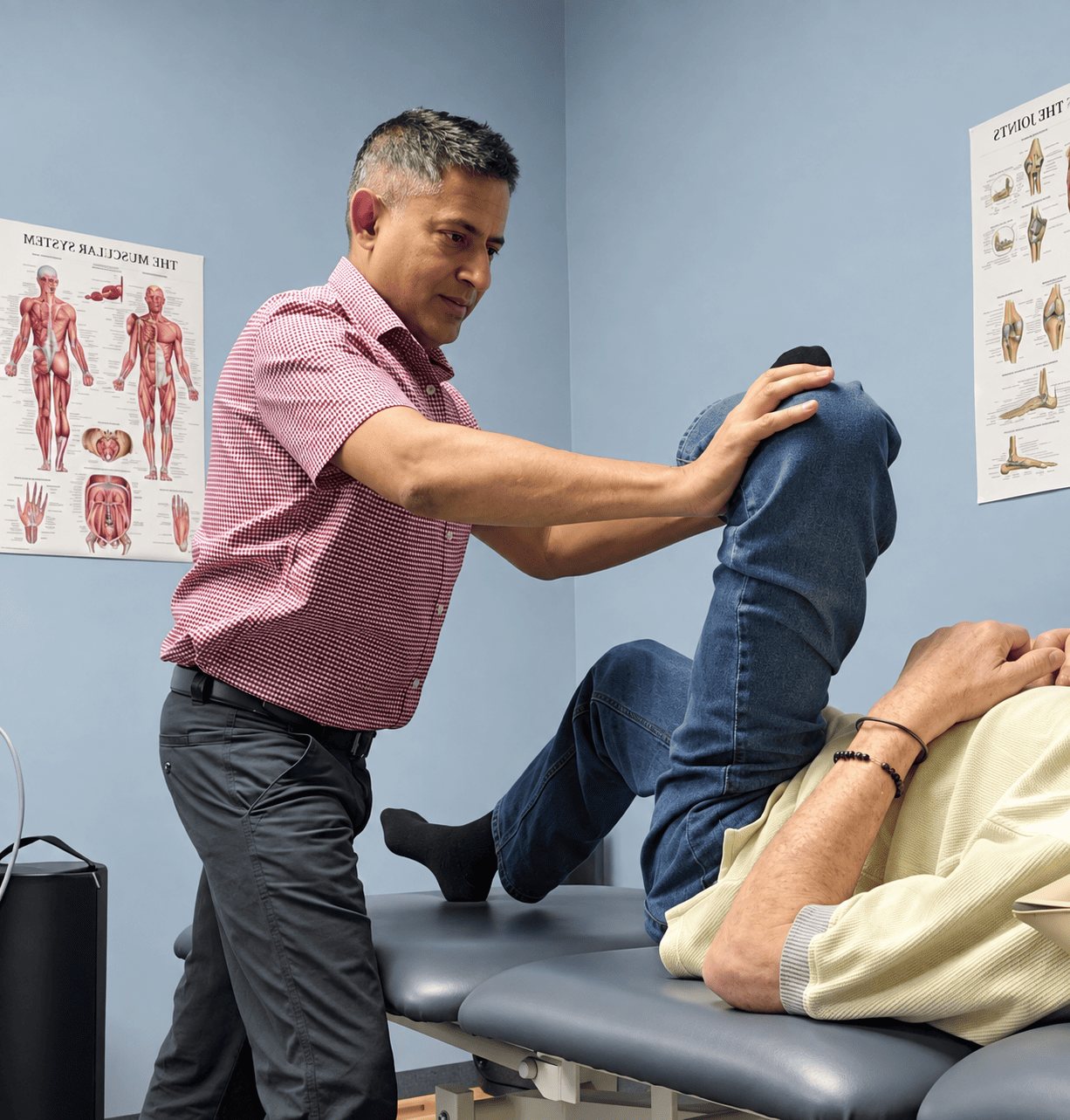
Knee pain from climbing the Hamilton Escarpment stairs is most often caused by patellofemoral pain syndrome (runner's knee), IT band syndrome, or patellar tendinopathy - all overuse conditions that respond well to physiotherapy. If your knee pain persists beyond a week or two, worsens with each outing, or starts affecting your daily movement, a physiotherapy assessment is a reasonable next step.
Why the Hamilton Escarpment Stairs Are Hard on Knees
Hamilton's escarpment stair systems - including the Wentworth, Dundurn, James, Kenilworth, and Chedoke stairs - are a popular fitness destination for Hamilton Mountain residents and visitors alike. Climbing hundreds of feet of vertical elevation is a genuine cardiovascular and leg workout.
But stair climbing puts the knee joint under significant load. On the way up, the quadriceps work hard through a bent-knee position. On the way down, the load can be even greater - the knee controls the descent against gravity, creating compressive and shear forces through the patellofemoral joint and stress on the tendons and IT band.
For people who add the stairs suddenly - starting a new fitness routine, increasing frequency, or adding the stairs to an already-busy training schedule - the load can outpace what the tissues are ready to handle.
Common Causes of Knee Pain on the Escarpment Stairs
Patellofemoral Pain Syndrome (Runner's Knee)
Pain at the front of the knee, around or behind the kneecap, is the most common complaint from stair climbers. The kneecap (patella) glides in a groove on the thigh bone, and its tracking depends on the strength and flexibility of the surrounding muscles. When the quadriceps, hip abductors, or glutes are weak or the IT band is tight, the kneecap may track slightly off-centre under load.
Symptoms: aching at the front of the knee, pain going downstairs more than up, pain after sitting for long periods (the "theatre sign"), and stiffness at the start of a session.
IT Band Syndrome
The iliotibial band is a thick band of connective tissue running from the hip down the outside of the thigh to just below the knee. In stair and hill climbing, it can become irritated where it passes over the outside of the knee.
Symptoms: sharp or burning pain on the outer side of the knee, usually appearing after a set distance or elevation gain and easing with rest.
Patellar Tendinopathy (Jumper's Knee)
The patellar tendon connects the kneecap to the shin bone. Repeated loading through stair climbing can irritate this tendon, especially in people who train heavily or who returned to activity after a break.
Symptoms: pain just below the kneecap, often worse going downstairs or after prolonged sitting. The area may feel tender to press.
Osteoarthritis
For older adults, knee osteoarthritis can be aggravated by the high joint loads of stair climbing. Pain from osteoarthritis is typically aching and diffuse rather than sharp, often accompanied by stiffness that is worse in the morning and after rest.
When Should You See a Physiotherapist for Knee Pain?
See a physiotherapist if:
- Knee pain is present during or after every stair session and is not improving with a week or two of rest
- Pain is increasing in intensity or appearing earlier in the session with each outing
- You have modified your training significantly to avoid the pain and it is still there
- Pain is affecting your daily activities - walking, stairs in your home, or sitting for work
Go to an emergency department or see a doctor promptly if you have:
- Significant swelling of the knee that appeared quickly after a fall or collision
- Inability to bear weight on the leg
- The knee giving way or locking
- A pop or snap at the time of injury followed by immediate pain and swelling (possible ligament tear)
What Will a Physiotherapist Do for Escarpment Knee Pain?
At Medhealth Physiotherapy in Hamilton, your first assessment will include:
- A detailed history - what your pain feels like, when it started, what makes it worse and better, and your activity history
- Movement and strength assessment - looking at how you load the knee, your hip and glute strength, patellar tracking, flexibility, and any asymmetries
- Hands-on assessment of the knee, patella, tendons, and surrounding structures
- A clear explanation of findings and what is likely driving your symptoms
Treatment may include manual therapy, exercise rehabilitation focused on glute and quad strength and hip stability, load management advice for the stairs, taping techniques to support the patella, and laser therapy for pain and healing. Many people start treatment in the same visit as the assessment.
Can You Keep Climbing the Stairs While Doing Physiotherapy?
Often yes - with modification. A key part of physiotherapy for overuse knee injuries is finding the right training load: enough activity to maintain fitness and drive tissue adaptation, not so much that the irritation gets worse. Your physiotherapist will help you figure out how many sessions per week, what elevation gain, and what descent technique is appropriate while you are recovering.
Complete rest is rarely the right answer for overuse injuries. Managed, progressive loading is the goal.
Tips for Protecting Your Knees on the Hamilton Escarpment Stairs
- Increase frequency and volume gradually. If you are new to the stairs, build up over several weeks rather than going full-out immediately.
- Descend slowly and in control. The downward load is where most knee stress happens. Step down carefully rather than bounding.
- Strengthen your hips and glutes. Weakness in the hip stabilizers is a common contributing factor to patellofemoral pain. Single-leg exercises, clamshells, and hip hinges all help.
- Warm up before and stretch after. Dynamic warm-up before and calf, quad, and IT band stretching after can reduce post-session soreness.
- Vary your footwear. Worn-out shoe soles reduce shock absorption. Running shoes with good support are appropriate for the stairs.
Book Your Knee Pain Assessment in Hamilton
If knee pain is getting in the way of your escarpment workouts or your daily activities, Medhealth Physiotherapy on Upper James St in Hamilton is accepting new patients. Ash Sharma (Registered Physiotherapist) will assess your knee and build a plan to get you back on the stairs.
Free parking in the plaza and a nearby bus stop on Upper James St make it easy to get to the clinic.